
TL;DR
Taking L-lysine and monolaurin together is widely considered safe and may provide a powerful, dual-action approach to immune support. Research suggests monolaurin targets and disrupts the protective lipid envelopes of certain microbes, while L-lysine works internally to restrict the biological building blocks these microbes need to replicate.
Key Takeaways
- L-lysine and monolaurin operate through completely different biological mechanisms, making them complementary rather than redundant when taken together.
- Monolaurin physically disrupts the protective outer layer (lipid envelope) of certain enveloped viruses and bacteria.
- L-lysine acts as a competitive antagonist to arginine, an amino acid structurally required by many viruses to synthesize new proteins and replicate.
- Current scientific evidence and clinical formulations suggest co-administering these two compounds is highly stable, non-cytotoxic, and safe for most individuals.
- Dietary arginine intake can directly impact the efficacy of L-lysine, meaning dietary choices play a key role when combining these supplements.
Why Combine L-Lysine and Monolaurin?
When exploring natural options for immune balance and microbial defense, two compounds frequently appear in the same conversation: L-lysine and monolaurin. While both are well-regarded on their own, a common question arises regarding whether taking them concurrently is safe, redundant, or genuinely beneficial.
The short answer is that combining them may offer substantial synergistic benefits. Examining monolaurin vs lysine research reveals that these two compounds do not compete with each other in the body. Instead, they tackle immune challenges from entirely different, non-overlapping angles.
Understanding how they work together requires looking closely at their distinct cellular behaviors. Relying on just one mechanism is like guarding the front door of a building while leaving the windows open. By taking both, you are leveraging an outside-in and an inside-out approach to immune modulation, supporting the body’s natural defenses across multiple biological pathways.

How Do L-Lysine and Monolaurin Work Together?
To understand the synergy between these two compounds, it helps to visualize the process using an analogy. Imagine an unwanted microscopic invader attempting to build a fortress inside a host cell. Monolaurin acts like a battering ram aimed directly at the structural walls of the fortress, while L-lysine works behind the scenes to intercept the supply chain of building materials.
Both the monolaurin mechanism of action and L-lysine’s metabolic interference have been documented extensively in scientific literature, revealing why their combination is so compelling.
Monolaurin and Lipid Envelope Disruption
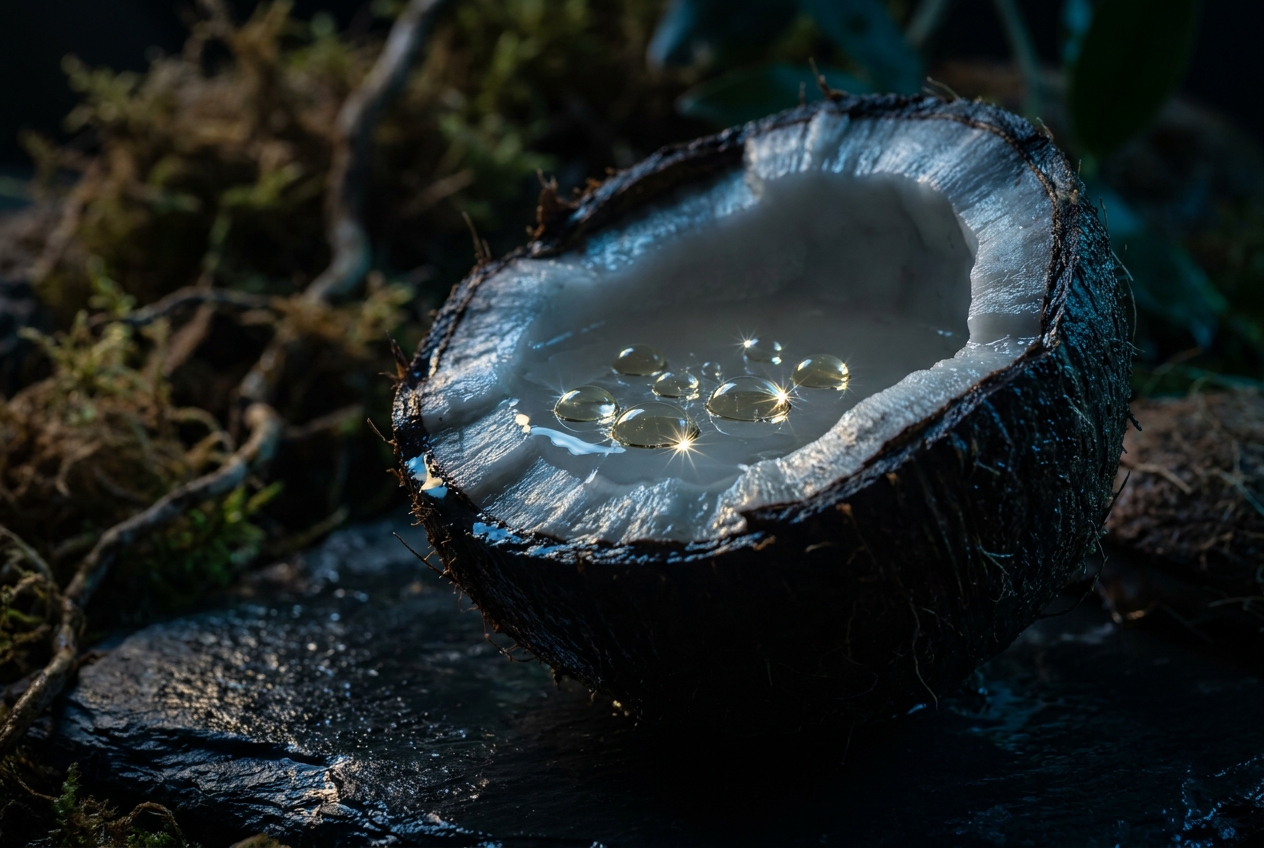
Monolaurin (scientifically known as glycerol monolaurate) is a lipid-based molecule derived from lauric acid, naturally found in coconut oil and human breast milk. Many problematic microbes, including certain enveloped viruses and bacteria, rely on a protective fatty outer layer known as a lipid envelope to survive, travel through the body, and infect host cells.
Because monolaurin is also a lipid, it can seamlessly integrate into these foreign envelopes. This is where how monolaurin works against viruses becomes highly specific. A 2026 study published in the Journal of Fish Diseases demonstrated that glycerol monolaurate exerts robust antiviral activity by directly disrupting the viral lipid envelope structure, altering its physicochemical properties, and compromising the physical stability of the virion.
By breaking down this barrier, monolaurin effectively uncoats the microbe. This disintegration prevents the virus or bacteria from successfully attaching to and penetrating healthy host cells. Furthermore, monolaurin immune system effects extend beyond physical disruption; by breaking down these pathogens, monolaurin helps expose them to the host’s innate immune cells, making it easier for the body’s natural defenses to recognize and clear the threat.
L-Lysine and Arginine Antagonism
While monolaurin works on the structural outside of a microbe, L-lysine works internally on the metabolic processes governing replication. L-lysine is an essential amino acid, meaning the human body cannot produce it internally and must obtain it entirely through diet or supplementation.
To understand L-lysine’s role, we must look at another amino acid: arginine. Many viruses require high concentrations of arginine to synthesize new viral proteins and successfully replicate within a host cell. L-lysine and arginine share the identical absorption pathways in the intestines and utilize the same cellular transport mechanisms. Because of this shared pathway, they actively compete with one another for absorption and cellular uptake.
A comprehensive review published in PubMed Central confirms that L-lysine effectively suppresses viral replication in enveloped viruses through competitive antagonism of arginine. By flooding the biological system with L-lysine, you effectively shift the physiological arginine-to-lysine ratio. This metabolic shift starves the virus of the exact structural building blocks it needs to reproduce. While the virus struggles to source arginine, it mistakenly takes up L-lysine instead, which halts the synthesis of functional viral proteins.
What Factors Affect Their Combined Efficacy and Safety?
While co-administering these two supplements is generally recognized as safe, several biological and environmental factors influence how effectively they support your immune system. Evaluating these variables ensures you get the most out of your immune support protocol.
- Dietary Arginine Intake: Because L-lysine competes directly with arginine for cellular uptake, a diet heavily loaded with arginine-rich foods may dilute the efficacy of L-lysine supplementation. Foods like chocolate, peanuts, almonds, seeds, and certain grains are exceptionally high in arginine. Balancing your diet to favor lysine-rich foods (like dairy, fish, and poultry) is a critical factor when utilizing L-lysine for immune support.
- Formulation Stability and Cytotoxicity: Combining these ingredients is not just conceptually sound; it is chemically stable and mucosal-safe. A 2024 study in the Journal of Dental Sciences evaluating a clinical co-formulation of L-lysine and glycerol monolaurate noted potent synergistic antimicrobial efficacy alongside excellent safety, structural stability, and low cytotoxicity to sensitive epithelial cells. This suggests the body easily handles processing both simultaneously without causing cellular stress.
- Bioavailability and Absorption: For these compounds to reach systemic circulation and exert their effects, they must survive the digestive tract. Monolaurin is generally well-absorbed, but its bioavailability can be hindered by unnecessary fillers or binders. The optimal monolaurin dosage research points toward pure, additive-free formulations being the most reliable for consistent absorption into the bloodstream.

Frequently Asked Questions
Are there any side effects to taking L-lysine and monolaurin together?
For the vast majority of people, the combination is very well-tolerated. Because they are both naturally occurring dietary substances (L-lysine is an amino acid, monolaurin is a fatty acid derivative), they exhibit low toxicity. Mild gastrointestinal upset can occasionally occur if taken in unusually large doses on an empty stomach, but standard serving sizes are generally safe and non-irritating.
Should I take them daily or only when needed?
Both compounds can be taken daily as part of a foundational immune maintenance protocol, or they can be used dynamically during times of increased physical stress or seasonal changes. Many individuals choose a lower daily intake to maintain an optimal arginine-to-lysine ratio and keep lipid envelopes suppressed, adjusting their routine as needed based on their personal wellness goals.
Can I take them on an empty stomach?
While L-lysine is often recommended to be taken on an empty stomach to maximize its absorption (preventing it from competing with other amino acids in a meal), monolaurin is typically best taken with a meal or a small amount of food to prevent mild digestive discomfort. Many users find success taking L-lysine slightly before a meal, and monolaurin during or immediately after.
How do I choose a quality supplement?
When evaluating products, prioritize those that transparently list their ingredients without unnecessary fillers, synthetic binders, or artificial additives. Look for pure glycerol monolaurate and highly bioavailable forms of L-lysine (such as L-lysine hydrochloride). You can explore high-quality, pure monolaurin options designed for optimal absorption at Shop Monolaurin.
The Bottom Line on L-Lysine and Monolaurin
The scientific consensus suggests that combining L-lysine and monolaurin is not only safe but strategically sound. By pairing monolaurin’s scientifically validated ability to dismantle protective microbial lipid envelopes with L-lysine’s capacity to restrict the biological building blocks required for viral replication, this combination offers a robust, dual-action approach to immune modulation.
Because they do not compete for the same metabolic pathways or perform the same functions, they act as the perfect complementary pair. As with any wellness protocol, consistency, dietary awareness, and supplement quality matter deeply. Whether you are looking for daily immune balance or targeted seasonal support, these two natural compounds may serve as a powerful, evidence-based addition to a comprehensive health regimen.

References
- Potent Inhibitory Effects of Lauric Acid and Glycerol Monolaurate Against CyHV-2 and the Viral Envelope. Journal of Fish Diseases, 2026. https://doi.org/10.1111/jfd.70129
- Lysine for Herpes Simplex Prophylaxis: A Review of the Evidence. PubMed Central (PMID: 30881246), 2017. https://pubmed.ncbi.nlm.nih.gov/30881246/
- Effect of mouthwash containing poly l-Lysine and glycerol monolaurate on oral Helicobacter pylori relating to biofilm eradication, anti-adhesion, and pro-inflammatory cytokine suppression. Journal of Dental Sciences, 2024. https://doi.org/10.1016/j.jds.2023.10.010