TL;DR
Research suggests monolaurin may support vaginal health by disrupting the lipid envelopes of pathogens like Candida albicans and Gardnerella vaginalis. Unlike conventional treatments that can wipe out healthy bacteria, studies indicate monolaurin specifically targets these harmful overgrowths while actively sparing protective, acid-producing Lactobacillus species essential for vaginal microbial balance.
Key Takeaways
- Monolaurin actively disintegrates the protective biofilms created by fungal overgrowths like Candida albicans.
- Evidence suggests monolaurin selectively targets harmful bacterial vaginosis pathogens while leaving beneficial microflora intact.
- By down-regulating specific cytokines, monolaurin may help reduce the localized mucosal inflammation commonly associated with yeast and bacterial imbalances.
- Supporting long-term vaginal health requires prioritizing treatments and supplements that maintain the body’s natural acid-producing bacteria.
Understanding the Vaginal Microbiome
The human vagina hosts a complex, delicate ecosystem of microorganisms. In a healthy state, protective bacteria—predominantly Lactobacillus species—produce lactic acid and hydrogen peroxide, maintaining an acidic environment that prevents opportunistic pathogens from multiplying.
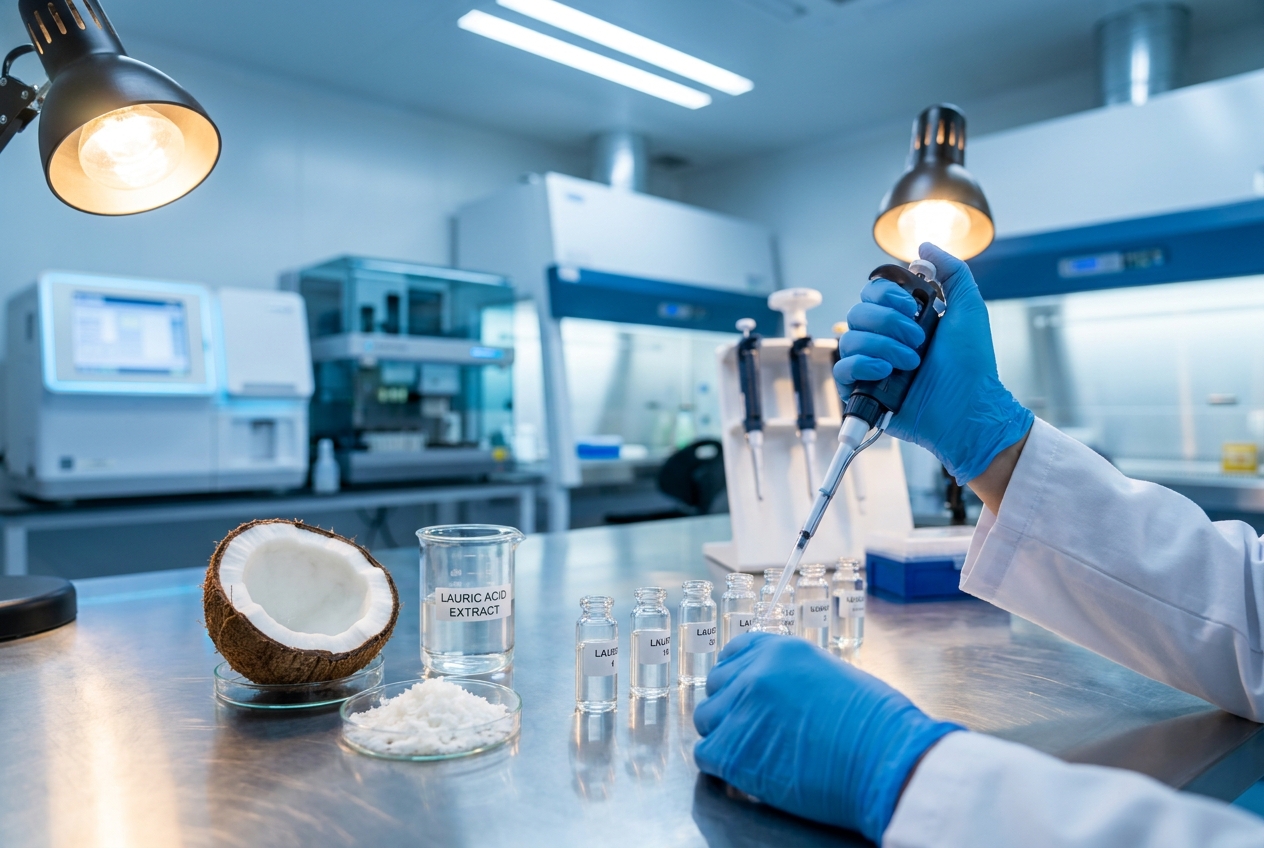
When this environment is disrupted by stress, antibiotics, diet, or hormonal shifts, the resulting pH change allows naturally occurring fungi and harmful bacteria to overgrow. This disruption typically manifests in one of two ways: a yeast overgrowth driven by Candida albicans, or Bacterial Vaginosis (BV) driven by pathogens like Gardnerella vaginalis. Traditional antimicrobial approaches often act non-specifically, clearing out both the overgrowth and the beneficial Lactobacillus, which can trap individuals in a cycle of recurring imbalances. Research into natural compounds has identified monolaurin—a lipid extract derived from lauric acid—as a potential mechanism for restoring this microbial balance without collateral damage to healthy flora.
How Does Monolaurin Target Candida Yeast Overgrowth?
Candida albicans is a resilient fungus capable of forming dense biofilms—protective structural matrices that shield the yeast from the body’s immune response and many standard antifungal agents. Monolaurin’s primary antifungal property lies in its ability to physically interact with and destabilize the fungal cell membrane.
Laboratory evaluations demonstrate that monolaurin possesses potent antifungal efficacy. A 2016 study published in PeerJ found that monolaurin effectively penetrates and disrupts Candida albicans biofilms at a minimum inhibitory concentration (MIC) of 62.5-125 µM. Beyond simply breaking down the structural defense of the yeast, the study noted that monolaurin actively down-regulates pro-inflammatory host cytokines, specifically IL-1α and IL-1β. This dual action makes it a subject of high interest for those seeking a natural defender against Candida overgrowth, as it addresses both the fungal presence and the inflammatory response that causes tissue discomfort.
These mechanisms are not limited to isolated petri dishes. In vivo mucosal models confirm that the topical application of monolaurin significantly decreases overall Candida albicans fungal burden. A 2018 study in the Biological and Pharmaceutical Bulletin observed that monolaurin limited biofilm progression effectively over a 5-day monitoring period in live mucosal tissue environments. For individuals exploring strategies to fight Candida, thrush, and other yeast overgrowths, this data suggests monolaurin physically disassembles the architecture of the yeast without requiring harsh synthetic chemicals.
Can Monolaurin Support Balance Against Bacterial Vaginosis (BV)?
Bacterial vaginosis is fundamentally an issue of ecological displacement. Gardnerella vaginalis and other anaerobic bacteria multiply, raising the local pH and displacing the protective Lactobacillus. The challenge in managing BV is finding an intervention that removes the Gardnerella while leaving the Lactobacillus alone to repopulate the environment.
Monolaurin exhibits a unique, targeted antibacterial action that appears to accomplish exactly this. According to a 2012 study published in Antimicrobial Agents and Chemotherapy, glycerol monolaurate (monolaurin) exhibits direct antibacterial activity against primary BV pathogens, including Gardnerella vaginalis. Crucially, the researchers found that the compound selectively targets these pathogens while actively sparing protective, healthy human Lactobacillus species.
This selective targeting is why researchers view monolaurin as a profound balancing act for potential bacterial overgrowth in the vagina. Because Lactobacillus lacks the specific lipid membrane vulnerabilities present in Gardnerella, the beneficial bacteria survive the introduction of monolaurin and can continue producing the lactic acid necessary to maintain a healthy vaginal pH.
What Factors Affect Vaginal Microbial Health?
- Systemic Antibiotic Use: Broad-spectrum antibiotics cannot distinguish between respiratory infections and beneficial vaginal flora. Wiping out Lactobacillus frequently triggers secondary yeast overgrowths.
- Glycemic Load and Diet: Candida albicans thrives on excess glucose. High-sugar diets can alter mucosal secretions, creating an optimal feeding ground for fungal proliferation.
- Hormonal Fluctuations: Estrogen levels directly influence the amount of glycogen available in vaginal tissue. Drops in estrogen (due to menstruation, menopause, or certain birth controls) can temporarily starve Lactobacillus, leading to pH imbalances.
- Harsh Soaps and Douching: Introducing alkaline soaps into an acidic environment immediately neutralizes the protective acid mantle, giving rapid-replicating pathogens a window to establish dominance.
Frequently Asked Questions
Is monolaurin safe for healthy vaginal bacteria?
Yes, evidence indicates that monolaurin is safe for beneficial microflora. Studies show that while it aggressively targets the lipid membranes of pathogens like Gardnerella vaginalis, it actively spares Lactobacillus species, allowing the body’s natural defense mechanisms to remain intact.
How quickly does monolaurin affect Candida biofilms?
In vivo studies monitoring mucosal tissue environments have shown that monolaurin significantly decreases fungal burden and limits the progression of Candida albicans biofilms within a 5-day observation period.
Can you use monolaurin instead of traditional antifungals?
Monolaurin is an educational and dietary supplement that may support microbial balance and overall immune function. While research demonstrates its potent in vitro and in vivo antifungal properties, it is not legally classified as a medication to “cure” or “treat” medical infections. It is often used as a supportive, natural intervention.
Does monolaurin reduce localized inflammation?
Yes, research demonstrates that monolaurin actively down-regulates pro-inflammatory cytokines, specifically IL-1α and IL-1β, which are typically triggered by fungal and bacterial infections, thereby helping to calm irritated mucosal tissue.

The Verdict on Monolaurin and Vaginal Health
Maintaining vaginal health requires a nuanced approach to microbial balance. Because the ecosystem relies heavily on the presence of specific acid-producing bacteria, blunt-force antimicrobial treatments often cause as many problems as they solve. The scientific explanation of monolaurin’s mechanism of action—specifically its ability to dismantle the lipid envelopes of Candida albicans and Gardnerella vaginalis while sparing Lactobacillus—presents a compelling case for its use as a supportive agent.
By disrupting pathogen biofilms and lowering local inflammation, monolaurin supports the body’s natural ability to restore its optimal pH. For those looking to integrate this science-backed compound into their daily immune routine, high-quality sourcing is essential. Ensure you are evaluating pure, properly dosed supplements by visiting Shop Monolaurin to explore trusted options.
Continue Exploring
- Candida, Thrush, and Other Yeast Overgrowths
- Balancing Act: Monolaurin’s Potential in Treating Bacterial Overgrowth in the Vagina
- Monolaurin: A Natural Defender Against Candida Overgrowth
References
- Seleem D, et al. (2016). In vitro evaluation of antifungal activity of monolaurin against Candida albicans biofilms. PeerJ. https://doi.org/10.7717/peerj.2148
- Biol Pharm Bull Authors (2018). In Vivo Antifungal Activity of Monolaurin against Candida albicans Biofilms. Biological and Pharmaceutical Bulletin. https://doi.org/10.1248/bpb.b18-00256
- Algburi A, et al. (2012). The natural antimicrobial peptide subtilosin acts synergistically with glycerol monolaurate, lauric arginate, and ε-poly-L-lysine against bacterial vaginosis-associated pathogens but not human lactobacilli. Antimicrobial Agents and Chemotherapy. https://doi.org/10.1128/AAC.05861-11