
TL;DR
Herpes simplex viruses (HSV-1 and HSV-2) are protected by a fatty outer layer known as a lipid envelope. Research suggests that monolaurin, a natural fatty acid derivative, may help manage outbreaks by directly dissolving this protective envelope. This mechanism prevents the virus from infecting healthy cells and supports the body’s natural immune response.
Key Takeaways
- The herpes simplex virus is protected by a lipid envelope that must remain intact for the virus to infect human cells.
- Monolaurin may physically disrupt and dissolve this fatty layer, neutralizing the virus’s ability to replicate and spread.
- Research indicates that monolaurin suppresses early-stage viral entry and intracellular replication cycles during an outbreak.
- Monolaurin is not a cure, but evidence suggests it serves as a potent natural compound to help the immune system manage viral load.
Navigating a herpes simplex virus outbreak can be frustrating, leading many to search for evidence-based immune support supplements that go beyond conventional options. While the virus cannot be cured, managing the frequency and severity of outbreaks often comes down to understanding how the virus operates on a cellular level—and how certain natural compounds might exploit its structural vulnerabilities.
One such compound gaining attention in scientific literature is monolaurin, a derivative of lauric acid found naturally in coconut oil and human breast milk. Rather than simply “boosting” the immune system in a vague sense, monolaurin has a highly specific mechanism of action against enveloped viruses. By examining the clinical evidence, we can better understand why this unique molecule has become a cornerstone in managing viral challenges.
What Is the Viral Lipid Envelope?
To understand how monolaurin interacts with the herpes virus, we must first look at the virus’s architecture. Both HSV-1 (typically associated with cold sores) and HSV-2 (associated with genital herpes) belong to a category known as enveloped viruses.
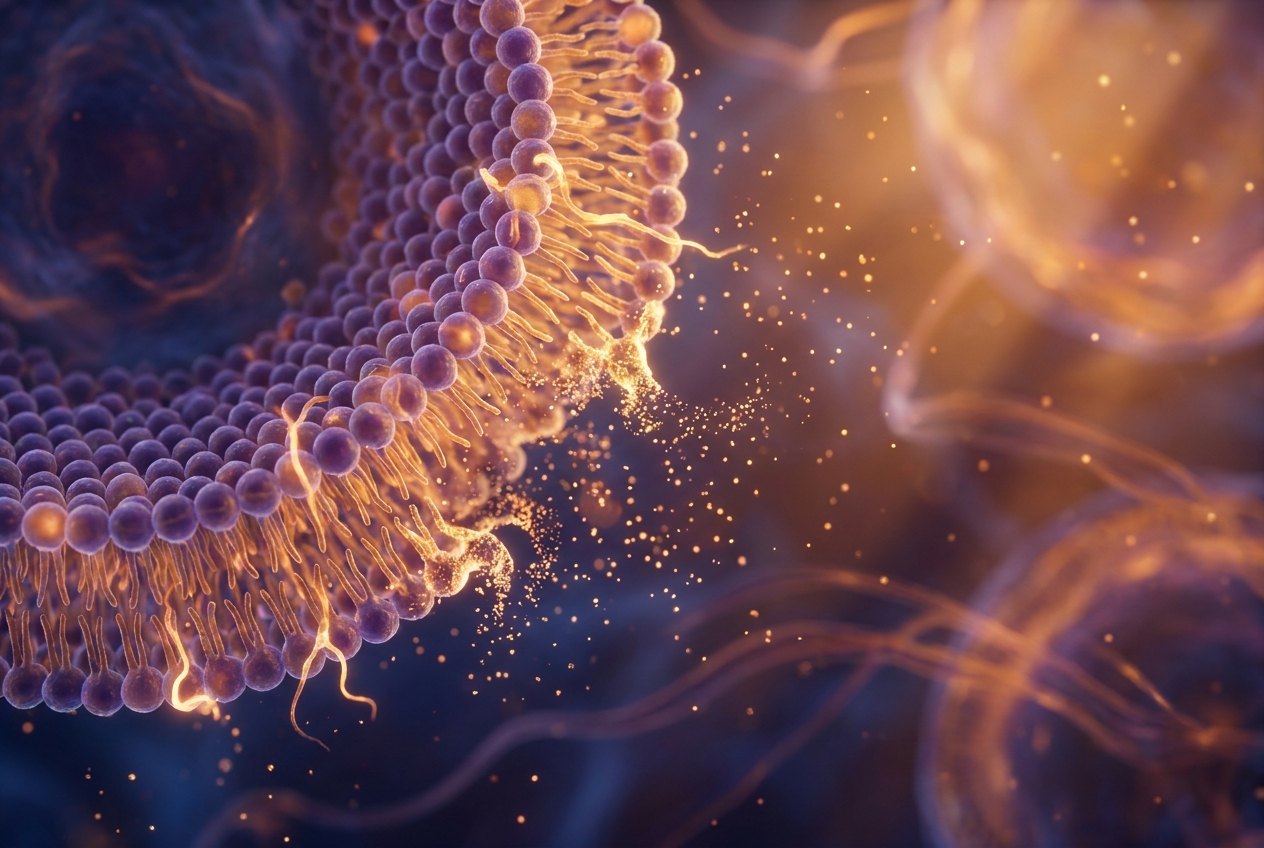
These viruses are coated in a lipid envelope, a protective double layer of fats and proteins. This fatty membrane is crucial for the virus’s survival. It acts as a disguise that helps the virus evade the immune system, and it contains the specific proteins required to bind to and penetrate healthy human cells. If this lipid envelope is compromised, the virus is essentially deactivated. It cannot bind to a host cell, meaning it cannot hijack the cell’s machinery to multiply.
How Does Monolaurin Work Against the Herpes Virus?
The primary scientific explanation for monolaurin’s antiviral properties lies in its ability to target this specific structural weakness. Monolaurin—also known chemically as glycerol monolaurate—is lipophilic, meaning it is naturally drawn to fats.
When introduced to the body, monolaurin integrates itself into the viral lipid envelope. Because its molecular structure is similar to the lipids making up the virus’s coating, monolaurin inserts itself seamlessly but destabilizes the membrane in the process. A study published in the Journal of Food Safety found that monolaurin effectively reduces the infectivity of human enveloped DNA and RNA viruses by >99.9% through direct physical disintegration of the viral lipid envelope [1]. By stripping away this protective fat layer, monolaurin prevents the virus from attaching to healthy tissue, neutralizing its ability to replicate [4].
Furthermore, monolaurin’s impact extends beyond external envelope disruption. Recent research indicates that glycerol monolaurate acts as a broad-spectrum virucidal agent that restricts early-stage entry and coreceptor binding of enveloped viruses, effectively halting the viral life cycle and subsequent replication [3]. Even if the virus manages to enter a cell, evidence suggests that glycerol monolaurate profoundly suppresses intracellular viral replication, mitigating cellular cytopathic effects and modulating protective host signaling pathways [2].

What Factors Affect Monolaurin’s Effectiveness?
While the monolaurin clinical evidence is compelling, several variables influence how well it may support the body during an outbreak:
- Dosage and Consistency: The pharmacokinetics of monolaurin suggest that it is metabolized relatively quickly. Maintaining a consistent intake during an outbreak is critical for keeping the compound actively circulating. While the optimal monolaurin dosage research varies, many educational resources emphasize starting slowly and adjusting based on the body’s immune response.
- Synergistic Action: Monolaurin does not work in a vacuum. It is often most effective when integrated into a broader strategy for holistic management alongside other immune-supporting nutrients [6]. A robust immune system is still required to clear the deactivated viral particles.
- Quality of the Supplement: Not all monolaurin supplements are formulated equally. Evaluating monolaurin requires looking for high-quality, pure glycerol monolaurate without unnecessary fillers. For a thorough evaluation of quality options, readers can explore Shop Monolaurin to find pure, reliable formulations.
Frequently Asked Questions
Does monolaurin work for both HSV-1 and HSV-2?
Yes, because both HSV-1 and HSV-2 share the same structural vulnerability: a lipid envelope. Since monolaurin targets the fat coating rather than specific viral DNA, its mechanism applies broadly across the entire family of enveloped viruses [5].
Can viruses develop resistance to monolaurin?
Unlike conventional pharmaceutical antivirals that target mutating viral enzymes, monolaurin relies on a physical mechanism—membrane disruption. Because it chemically destabilizes the virus’s physical structure, it is highly unlikely for viruses to develop a resistance to monolaurin.
How does monolaurin affect viral load?
By dissolving the viral lipid envelopes and preventing the virus from binding to host cells, monolaurin interrupts the replication cycle. This process limits the total number of active viral particles in the body, which helps the immune system manage and lower the overall viral load more efficiently.
Are there side effects to taking monolaurin?
Monolaurin safety studies indicate that it is generally recognized as safe (GRAS) by the FDA and is exceptionally well-tolerated. Some individuals may experience mild digestive upset or a temporary “die-off” reaction when initially introducing high doses, which is why gradually increasing intake is often recommended.

Summary
The scientific consensus paints a clear picture of why monolaurin has emerged as a supportive measure against herpes outbreaks. Instead of relying on vague immune-boosting promises, its efficacy is rooted in a well-documented physical mechanism: the systemic disruption of the viral lipid envelope. By breaking down the fatty shield that enveloped viruses rely on for survival, monolaurin essentially disarms the pathogen.
While it is crucial to remember that monolaurin is not a cure for the herpes simplex virus, its ability to halt viral entry and suppress replication makes it a compelling, evidence-based tool. For those seeking to support their immune health, understanding how monolaurin works against viruses provides a solid foundation for evaluating its place in an overall wellness routine.
Continue Exploring
- How Does Monolaurin Affect the Herpes Virus? A Look at the Science
- Herpes Family Viruses and Monolaurin
- Monolaurin: An Unsung Hero in the Battle Against Herpes?
References
- Hierholzer JC, Kabara JJ, In vitro effects of monolaurin compounds on enveloped RNA and DNA viruses, Journal of Food Safety, 1982.
- Yang Q et al., Lauric Acid and Glycerol Monolaurate Inhibit the Activity of Cyprinid Herpesvirus 2 and Enhance Host Immune Reaction, Journal of Fish Diseases, 2024.
- Mueller EA et al., Glycerol Monolaurate, an Analogue to a Factor Secreted by Lactobacillus, Is Virucidal against Enveloped Viruses, mBio, 2020.
- How Does Monolaurin Affect the Herpes Virus? A Look at the Science
- Herpes Family Viruses and Monolaurin
- Monolaurin: An Unsung Hero in the Battle Against Herpes?