
TL;DR
While primarily known for immune support, emerging research suggests monolaurin may indirectly aid weight management. As a derivative of lauric acid—a medium-chain fatty acid—monolaurin interacts with the gut microbiome to potentially influence lipid metabolism, support fat breakdown pathways, and regulate hunger hormones in animal models.
Key Takeaways
- Monolaurin is a medium-chain fatty acid derivative that may support weight management by structurally modifying the gut microbiome rather than acting as a direct stimulant.
- Emerging animal research indicates that monolaurin can influence the PPARγ pathway, potentially promoting fat breakdown (lipolysis) while downregulating new fat storage.
- By promoting beneficial gut bacteria, lauric acid and monolaurin may help regulate the secretion of ghrelin, the hormone responsible for signaling hunger to the brain.
- Current evidence for monolaurin’s metabolic benefits relies on animal and in vitro models, meaning it should be viewed as a supportive supplement rather than a standalone weight loss treatment.
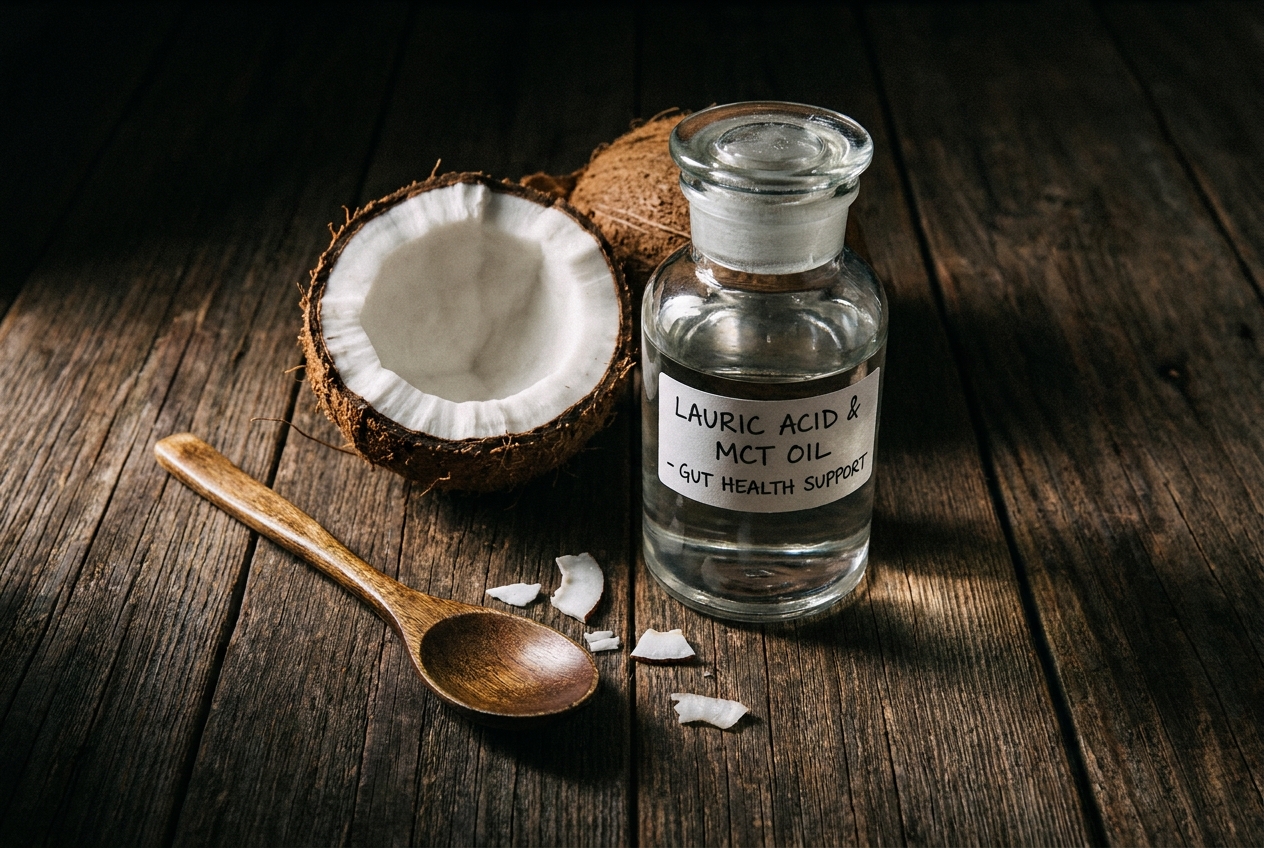
Monolaurin is widely recognized as a dietary supplement for immune balance. Derived from lauric acid, the predominant fatty acid found in coconut oil and human breast milk, it functions primarily to maintain microbial harmony. Because its parent compound belongs to the family of medium-chain triglycerides (MCTs), researchers are investigating if monolaurin shares the metabolic benefits often associated with MCT oils. The relationship between monolaurin and body weight relies on complex biological interactions involving cellular metabolism, gut microbiome shifts, and hormone regulation.
Animal studies currently provide the foundation for understanding these mechanisms. While human clinical trials directly evaluating monolaurin for weight loss remain necessary, identifying specific biochemical pathways clarifies how medium-chain fatty acids influence physiology. Understanding these pathways positions monolaurin as a supportive component in a broader metabolic ecosystem.
How Does Monolaurin Affect Metabolism and Fat Burning?
The body stores and breaks down fat through intricate cellular signaling pathways. At the center of this process is lipid metabolism, the biochemical mechanism dictating whether dietary energy is utilized or stored. Emerging research indicates that glycerol monolaurate—the scientific term for monolaurin—may actively influence these internal switches. A 2026 study published in Microbial Pathogenesis examining animal models found that a nutritional complex containing glycerol monolaurate actively modulated lipid metabolism by co-regulating the PI3K-AKT pathway and the constitutive co-activator of PPARγ.
Think of PPARγ as a cellular warehouse manager directing the body to store fat. By downregulating this pathway, the monolaurin complex directly promoted lipolysis (fat breakdown), suppressed new lipid synthesis, and significantly reduced overall fat accumulation in the body and plasma. While this data derives from an animal model (Penaeus vannamei), it establishes a biological mechanism for how medium-chain fatty acid derivatives shift the physiological state from fat storage to fat utilization.

What Impact Does Monolaurin Have on the Gut Microbiome and Weight?
The composition of the digestive ecosystem heavily influences how the body extracts and stores energy. An imbalance in gut bacteria is frequently linked to metabolic dysfunction and obesity. Monolaurin operates fundamentally as an antimicrobial and microbiome-modulating compound. Modifying the gut ecosystem with medium-chain fatty acids can actively promote lipid catabolism and combat obesity.
Recent nutritional interventions demonstrate the power of lauric acid derivatives in reshaping this internal environment. A 2025 study in Foods evaluated a lauric acid complex in a hyperlipidemia animal model. The intervention significantly reduced body weight and improved blood lipid profiles by shifting the gut microbiome. The lauric acid positively promoted the abundance of beneficial, fat-regulating bacteria like Muribaculaceae, while simultaneously inhibiting harmful, pro-inflammatory microbial taxa. Reducing inflammation in the gut allows the body to efficiently manage metabolic processes and avoid the systemic stress that drives weight gain.

How Do Gut Microbiota Alterations Influence Hunger Hormones?
The connection between the gut and the brain dictates appetite control. When the stomach is empty, it releases ghrelin, a hormone signaling hunger to the brain. The gut microbiome directly influences the secretion of these metabolic hormones. Supplementation with specific medium-chain triglycerides, including glycerol monolaurate (C12), successfully alters gastrointestinal microorganisms and specific gut metabolites.
According to a 2024 study in Microbiome, this microbiota modulation actively regulated the secretion of acylated ghrelin. By altering the microbial population, the medium-chain triglycerides improved overall energy metabolism and decreased oxidative stress markers in animal models. This biological action suggests that monolaurin may influence both how fat is stored and how frequently the brain receives hunger signals from the digestive tract.

What Factors Affect Monolaurin’s Potential Benefits?
Monolaurin is not a weight loss drug. Any potential metabolic benefits are highly contextual and depend on specific biological variables.
- Baseline Gut Health: Individuals with severe gut dysbiosis may experience different metabolic responses to monolaurin compared to those with a balanced microbiome. The compound’s primary action requires microbial modulation before producing systemic metabolic shifts.
- Dietary Context: Monolaurin cannot override a hypercaloric diet. Its cellular mechanisms involving lipolysis and ghrelin regulation serve to optimize existing metabolic processes, not replace nutritional discipline.
- Supplement Quality: The purity and formulation of the supplement dictate its bioavailability. Scientific research relies on precise, uncontaminated doses. For a neutral evaluation of quality criteria and to review pure formulations, visit Shop Monolaurin to ensure the selected supplement meets rigorous manufacturing standards.

Frequently Asked Questions
Is monolaurin a fat burner?
Monolaurin is not explicitly classified as a fat burner. It is a derivative of a medium-chain fatty acid that emerging animal research suggests may support lipid metabolism and lipolysis (fat breakdown) by interacting with specific cellular pathways, though human clinical trials are still needed to confirm this effect.
Is monolaurin the same as MCT oil for weight loss?
While monolaurin is derived from lauric acid (an MCT), it functions differently than liquid MCT oil. MCT oil is rapidly absorbed and utilized for immediate energy, whereas monolaurin is primarily utilized for its structural effects on the gut microbiome and immune balance, which may only indirectly support weight management.
Are there human clinical trials proving monolaurin causes weight loss?
No. Current scientific evidence regarding monolaurin’s impact on lipid metabolism, lipolysis, and hunger hormones like ghrelin is based on animal and in vitro models. It should be viewed as an educational and supportive compound, not a proven weight loss treatment.
How does monolaurin affect gut health related to weight?
Monolaurin acts on the digestive ecosystem by promoting beneficial bacterial taxa while inhibiting harmful, pro-inflammatory microbes. This balanced gut microbiome is better equipped to regulate metabolic processes and communicate effectively with hunger hormones, reducing systemic inflammation linked to obesity.
The Bottom Line: Can Monolaurin Support Your Goals?
The scientific understanding of lauric acid vs monolaurin science continues to evolve. While monolaurin’s primary role remains anchored in immune and microbial balance, its foundational properties as a medium-chain fatty acid derivative offer intriguing metabolic possibilities. By potentially influencing lipid metabolism pathways, reshaping the gut microbiome, and interacting with hunger-regulating hormones, monolaurin may serve as a supportive element in a comprehensive approach to health.
It is critical to recognize the limitations of current research, which relies heavily on animal models. Monolaurin is not a treatment or cure for obesity. However, for individuals seeking evidence-based immune support supplements that may also offer secondary metabolic and gut health benefits, it represents a fascinating biological compound worthy of consideration.
Continue Exploring
References
- Microbial Pathogenesis. (2026). Regulatory role of quercetin, cinnamaldehyde, and glycerol monolaurate complex on lipid metabolism and antiviral mechanisms against white spot syndrome virus in Penaeus vannamei. https://doi.org/10.1016/j.micpath.2026.108294
- Foods. (2025). Characterization and Nutritional Intervention Effects of Canna edulis Type 5 Resistant Starch in Hyperlipidemia Mice. https://doi.org/10.3390/foods14010092
- Microbiome. (2024). Medium-chain fatty acid triglycerides improve feed intake and oxidative stress by regulating ghrelin concentration and gastrointestinal tract microorganisms and rumen metabolites. https://doi.org/10.1186/s40168-024-01946-2
- Monolaurin And More. Medium Chain Fatty Acids and Digestive Health – Research on a Leaky Gut. https://monolaurinandmore.com/articles/monolaurin-and-digestive-health-how-to-help-and-repair-a-leaky-gut/