
TL;DR
Research suggests that monolaurin may support immune function during Epstein-Barr virus (EBV) reactivation by physically disrupting the virus’s protective lipid envelope. While not a cure, in-vitro studies indicate this broad-spectrum antiviral mechanism targets enveloped viruses, potentially blocking their cellular attachment.
Key Takeaways
- Epstein-Barr Virus (EBV) is an enveloped herpesvirus that transitions from dormancy to active shedding during periods of physiological stress.
- The monolaurin antiviral mechanism physically dissolves the lipid envelope of pathogens, fundamentally destabilizing the virus to prevent host cell entry.
- Determining optimal monolaurin dosage research points toward a gradual “low and slow” protocol to help monitor the body’s natural immune response and mitigate sudden die-off reactions.
- High-quality evidence based immune support supplements containing pure monolaurin are frequently integrated alongside proper rest and hydration to support baseline immune balance.
The Epstein-Barr virus is one of the most ubiquitous human viruses in the world, most notably recognized as the primary cause of infectious mononucleosis. However, successfully overcoming the initial acute infection does not mean the virus is entirely cleared from the body. Instead, EBV possesses the ability to enter a dormant state, quietly hiding within specific immune cells. Later in life, this dormancy can be interrupted—a process known as reactivation—requiring the host’s immune system to mount a secondary defense.
In the pursuit of targeted nutritional support, medium-chain fatty acids have garnered significant attention in microbiological research. Among these, using monolaurin for Epstein-Barr virus is frequently explored because of the compound’s unique chemical architecture. Derived from lauric acid, a fatty acid naturally found in coconut oil and human breast milk, monolaurin interacts directly with the physical structure of certain viral pathogens. Understanding exactly how this compound works requires a closer look at the anatomical structure of the virus itself.
What Causes Epstein-Barr Virus to Reactivate?
To understand how natural compounds interact with pathogens, it is necessary to examine the viral life cycle. EBV belongs to the herpesvirus family, a category of viruses defined by their ability to hide within the host’s cellular machinery indefinitely.
Upon initial infection, the Epstein-Barr Virus establishes lifelong latency as an episome inside the host’s B cells and epithelial cells. During this highly controlled dormant phase, the virus causes no clinical symptoms. However, cellular signal transduction, epigenetic shifts, and extreme environmental stressors can trigger what is known biologically as the lytic reactivation phase. This biological shift induces viral immediate-early genes (BZLF1 and BRLF1) that drive the assembly and shedding of new, enveloped progeny virions (Murata et al., 2021).
Essentially, when the host’s cellular immunity—specifically the T-cell response—is weakened by prolonged fatigue, oxidative stress, or secondary infections, the virus “wakes up.” It then hijacks the host cell machinery to synthesize new viral particles. As these new virions bud out of the host cell, they steal a piece of the host’s cellular membrane to create their own protective outer layer. Because EBV fundamentally relies on creating this intact lipid envelope during the lytic shedding phase, the structural membrane of the virus becomes a primary target for nutritional and chemical interventions.

How Does the Monolaurin Antiviral Mechanism Work?
Viruses are generally classified into two broad structural categories: enveloped and non-enveloped. EBV is an enveloped virus, meaning its core genetic material is encased in a protective outer layer constructed of lipids (fats), cholesterol, and glycoproteins. This envelope is mission-critical for the virus’s survival; the viral glycoproteins embedded in this fat layer act as molecular “keys” to bind to and enter healthy human cells.
The primary monolaurin mechanism of action is profound structural interference. Glycerol monolaurate (GML) is an amphiphilic molecule, meaning it possesses both a water-loving (hydrophilic) head and a fat-loving (lipophilic) tail. When introduced to enveloped viruses, GML’s fat-loving tail readily inserts itself into the tightly packed lipids of the viral membrane. Because monolaurin is structurally similar to the lipids in the envelope, it effectively disintegrates the outer membrane of herpes family viruses, causing the essential lipids and phospholipids to solubilize and separate.

Recent pathological research demonstrates that glycerol monolaurate and its precursor lauric acid exhibit potent antiviral activity against herpesviruses by physically disrupting this viral lipid envelope structure. This disruption alters the envelope’s physicochemical properties, fatally compromising virion stability and infectivity (Li et al., 2026). Without a structurally sound envelope, the viral glycoproteins are rendered useless. The naked viral particles can no longer attach to host cell coreceptors, completely halting the uncoating and infection process at the attachment phase.
Broadly, in-vitro evidence demonstrates that GML is highly virucidal against a wide array of enveloped pathogens, effectively restricting viral entry (Schlievert et al., 2020). While it is necessary to distinguish between in-vitro (laboratory) outcomes and human clinical trials, this monolaurin broad spectrum antiviral mechanism offers a clear, evidence-based rationale for its application as a supportive dietary supplement.
What Factors Influence Monolaurin Dosage and Monitoring?
When integrating monolaurin into an immune support protocol during viral reactivation, pacing and consistency are critical. Because monolaurin lipid envelope disruption can occur aggressively in a laboratory setting, applying this biological mechanism to human supplementation requires careful observation to manage how the immune system clears the resulting deactivated viral debris.
Starting Dosage and Titration
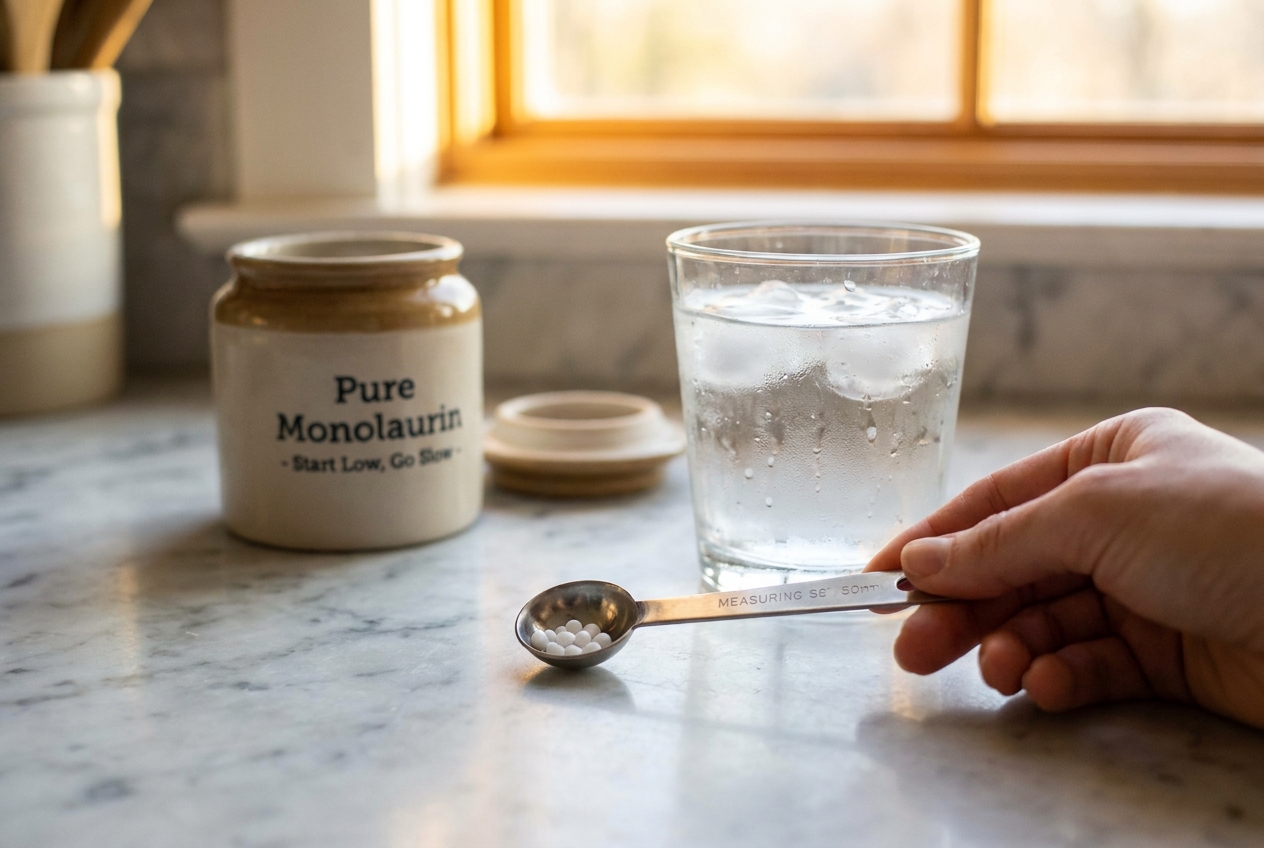
While there is no single prescribed medical dosage, optimal monolaurin dosage research and clinical consensus emphasize a gradual “start low and go slow” approach. Individuals frequently begin with a minimal daily dose (such as one scoop of pellets or a single capsule taken with food) and slowly increase the intake over several weeks. This titration allows the gastrointestinal tract to adapt and prevents the immune system from becoming overwhelmed by sudden pathogen neutralization.
Monitoring the Herxheimer Reaction
If viral particles are neutralized too rapidly, the liver and lymphatic system must filter and eliminate a sudden influx of cellular debris. This rapid clearance can occasionally trigger a Herxheimer reaction—a temporary, inflammatory immune response characterized by an increase in fatigue, mild body aches, swollen lymph nodes, or flu-like symptoms. Monitoring for these specific signs is essential. If symptoms noticeably worsen upon starting supplementation, protocols typically suggest reducing the dosage and increasing water intake to allow the body’s detoxification pathways to catch up.
Product Quality and Purity
The true efficacy of any nutritional intervention depends heavily on bioavailability and purity. When evaluating evidence based immune support supplements, it is crucial to seek out 100% pure monolaurin that is free of synthetic binders, unnecessary fillers, and artificial preservatives. Pellet forms often provide higher concentrations of active monolaurin by volume compared to traditional capsules, which frequently require flow agents like magnesium stearate. For rigorously tested, pure formulations, readers can explore specialized products at Shop Monolaurin.
Frequently Asked Questions
What is the optimal monolaurin dosage research suggesting?
Current research on optimal dosing emphasizes gradual titration based on individual tolerance rather than a fixed universal amount. Most nutritional protocols advise starting with a low daily dose (such as 600–1000 mg) and increasing slowly. This strategy helps monitor the body’s immune clearance rate and minimizes potential die-off reactions.
Can viruses develop resistance to monolaurin?
Because monolaurin works by physically dissolving the lipid envelope—a structural mechanism—rather than targeting specific viral proteins or genetic replication pathways, it is highly unlikely for viruses to mutate and develop a resistance to it. It acts as a physical solvent rather than a targeted pharmaceutical drug.
How does monolaurin affect viral load?
In-vitro studies indicate that by destabilizing the viral envelope and blocking cellular entry, monolaurin prevents the virus from successfully replicating in healthy cells. This protective mechanism may assist the host’s natural immune system in clearing the existing virions, thereby potentially supporting the management of overall viral load.
Are there long term effects of monolaurin?
Monolaurin is recognized as Generally Recognized As Safe (GRAS) by the FDA when utilized as a food additive. Because it is derived from naturally occurring compounds found in coconut oil and breast milk, it is typically well-tolerated for long-term daily use as a foundational component of immune support routines.

Summary
Epstein-Barr virus reactivation is primarily driven by physiological and environmental stressors that prompt the dormant virus to shed its protective, lipid-enveloped particles. By leveraging monolaurin and immune modulation, individuals can offer targeted structural support to their body’s natural defenses. The core monolaurin antiviral mechanism physically dismantles this viral envelope, rendering the pathogen completely incapable of cellular attachment and replication. While human clinical data continues to evolve, the robust in-vitro evidence validating monolaurin lipid envelope disruption establishes it as a highly logical, science-based consideration for maintaining optimal immune resilience against enveloped pathogens.
Continue Exploring
- Li et al., “Potent Inhibitory Effects of Lauric Acid and Glycerol Monolaurate Against CyHV-2 and the Viral Envelope,” Journal of Fish Diseases, 2026.
- Murata et al., “Molecular Basis of Epstein-Barr Virus Latency Establishment and Lytic Reactivation,” Viruses, 2021.
- Schlievert et al., “Glycerol Monolaurate, an Analogue to a Factor Secreted by Lactobacillus, Is Virucidal against Enveloped Viruses,” mBio, 2020.
- “Chronic Fatigue Syndrome vs. Epstein-Barr Virus vs. Mono,” /articles/chronic-fatigue-syndrome-epstein-barr-virus-and-mono-whats-the-difference-and-how-can-monolaurin-help
- “Epstein-Barr Virus Overview,” /articles/ebv-llysine-monolaurin