TL;DR
Coccidian parasites like Cyclospora and Cryptosporidium cause serious gastrointestinal illnesses that require professional medical diagnosis and standard pharmaceutical care. While ongoing laboratory and animal studies show that natural compounds like monolaurin, curcumin, artemisinin, eugenol, and resveratrol may interact with protozoal lipid membranes or modulate host inflammatory responses, these remain strictly preclinical research interests, not proven human therapies.
Key Takeaways
- Coccidian parasites are microscopic organisms responsible for gastrointestinal outbreaks, typically requiring standard medical treatments like TMP-SMX.
- Preclinical research shows monolaurin can disrupt the lipid membranes of certain protozoal parasites in laboratory settings.
- Emerging animal studies are testing compounds like curcumin nanoemulsions and eugenol against specific parasitic mechanisms, though results are not applicable to human treatment.
- Natural compounds remain subjects of active scientific curiosity, but anyone experiencing symptoms like watery diarrhea or severe cramping must seek immediate medical care.
Public health events, such as the widely documented July 2026 Cyclospora outbreak linked to iceberg lettuce, routinely bring parasitic infections to the forefront of health conversations. When the Centers for Disease Control and Prevention (CDC) issues active surveillance warnings for gastrointestinal illness, public interest naturally expands beyond standard medical protocols into the underlying science of how these organisms function—and how researchers are studying them in the lab.
Parasitology is a complex field. Alongside the development of standard pharmaceuticals, researchers frequently investigate natural compounds to understand their fundamental biological mechanisms against microscopic threats.
This article provides an educational overview of the pre-clinical research into natural compounds against protozoal organisms. It is critical to understand that these findings represent laboratory and animal research, not clinical evidence of effect in humans. Anyone experiencing symptoms of parasitic infection—such as watery diarrhea, cramping, and fatigue—should seek immediate medical care, as standard medical treatments are not optional or replaceable by natural compounds.
What Are Coccidian Parasites?
Coccidian parasites are a subclass of microscopic, single-celled protozoa that typically infect the intestinal tracts of animals and humans. They are transmitted primarily through contaminated food and water, reproducing inside the host’s cells and causing significant gastrointestinal distress.
Cyclospora cayetanensis, Cryptosporidium, and Toxoplasma gondii are among the most heavily researched examples. When a person ingests food or water contaminated with the oocysts (the hardy, egg-like phase) of these parasites, the organisms hatch in the digestive tract, invade the intestinal lining, and trigger a severe inflammatory response.
Diagnosing cyclosporiasis and similar infections requires specific stool testing ordered by a physician. The standard medical treatment for Cyclospora is TMP-SMX (trimethoprim-sulfamethoxazole), a prescription antibiotic. This intervention is necessary for recovery and cannot be substituted with dietary supplements.

While conventional medicine provides the necessary protocol for patient care, researchers continue to study the basic biology of these parasites using various natural compounds. Scientists are particularly interested in how substances like monolaurin, curcumin, artemisinin, eugenol, and resveratrol interact with protozoal structures in controlled laboratory environments.
How Does Monolaurin Interact With Protozoal Parasites?
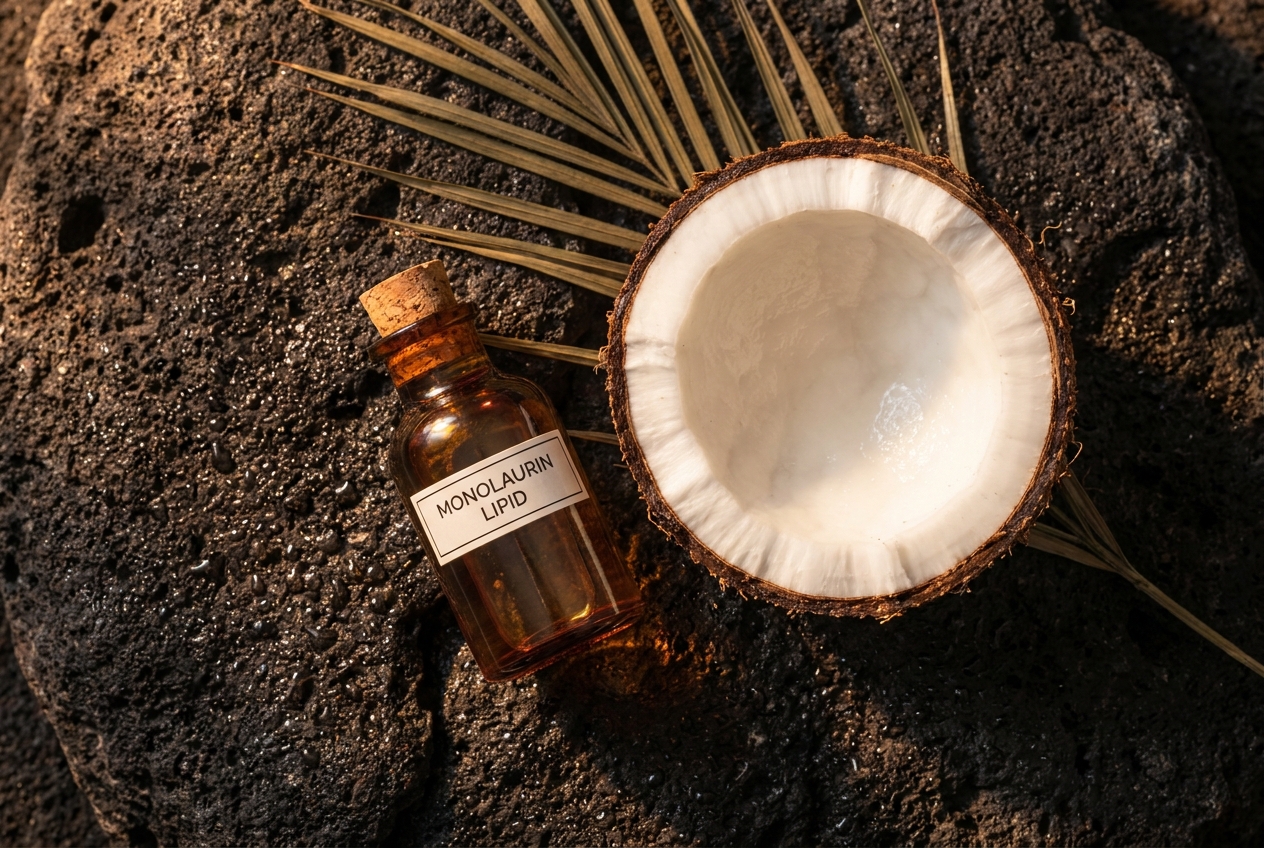
Monolaurin, a lipid extract derived from lauric acid, has been extensively studied for its interactions with lipid-coated microorganisms. In laboratory settings, monolaurin’s primary proposed mechanism is lipid envelope disruption. Because monolaurin is amphiphilic (having both water-attracting and fat-attracting properties), it can integrate into the protective lipid membranes of certain organisms, destabilizing their physical structure.
In vitro and animal research has examined monolaurin’s effects against specific protozoal parasites, including Giardia duodenalis, Entamoeba histolytica, and Blastocystis. Studies focusing on saturated fatty acids and cytokine responses suggest that monolaurin may structurally compromise these parasites while simultaneously modulating the localized inflammatory response in animal tissues. By potentially fortifying vital intestinal tight junction proteins, monolaurin remains a prominent subject in studies regarding intestinal resilience.
While monolaurin’s effects on the structural integrity of these specific protozoa have been documented in the lab, researchers have also begun studying related coccidian parasites (like Cyclospora and Cryptosporidium) using other natural compounds. To date, no clinical evidence claims monolaurin itself has been tested directly against Cyclospora.
Disclaimer: Monolaurin is not intended to diagnose, treat, cure, or prevent any disease. This information reflects preclinical research, not human medical applications.
What Does Preclinical Research Reveal About Curcumin and Artemisinin?
Beyond monolaurin, the scientific community is actively investigating other plant-derived compounds for their basic anti-parasitic activity in non-human models.
Curcumin and Coccidian Parasites
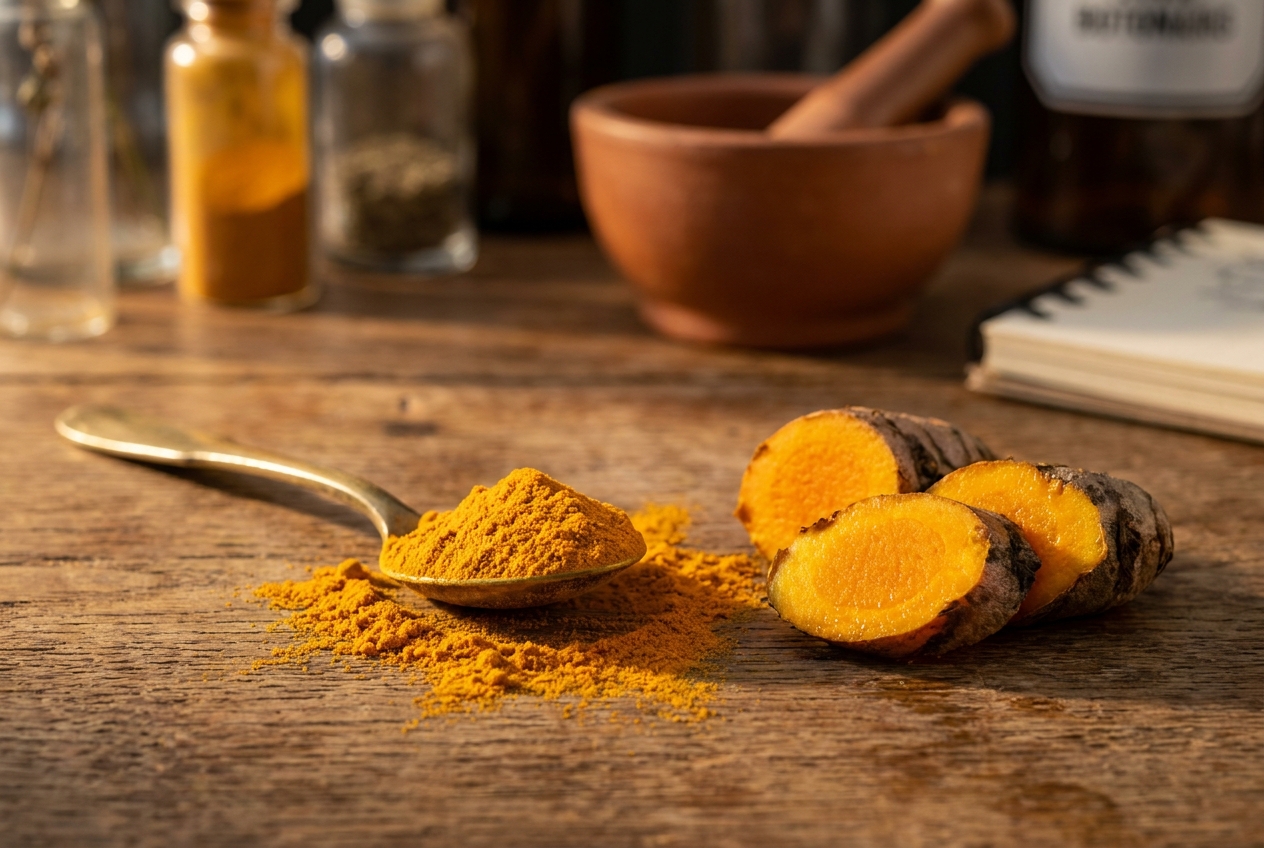
Curcumin, the active compound in turmeric, is an ongoing subject of scientific interest in parasitology. In 2009, Shahiduzzaman et al. demonstrated that curcumin showed significant in vitro growth inhibition against Cryptosporidium parvum, reducing the parasite’s ability to invade host cells in a petri dish. Later animal studies, such as Asadpour (2018) and Khalafalla (2011), compared curcumin’s effects against specific Eimeria species in poultry and mice.
More recently, a 2023 study by Mogahed et al. tested both standard curcumin and highly bioavailable curcumin nanoemulsions against Cyclospora-infected mice. The researchers were explicit that the nanoemulsion form interacted differently with the parasites than standard curcumin, resulting in observable changes to intestinal histopathology in the animal models. These findings highlight curcumin as a compound of significant scientific curiosity, though entirely within the realm of animal testing, not human medicine.
Artemisinin: From Malaria to Coccidia
Artemisinin (derived from Sweet Wormwood or Artemisia annua) has a well-documented history in malaria research, prompting scientists to explore its broader antiprotozoal potential.
Historically, anticoccidial studies in poultry (such as Allen 1997, Arab 2006, and Wiedosari 2018) have tracked artemisinin’s impact on intestinal protozoa. In 2010, del Cacho observed that artemisinin caused physical disruption to the oocyst walls of Eimeria tenella. Similarly, researchers like D’Angelo (2009) and Kläsener (2023) have documented artemisinin’s ability to alter the cellular ultrastructure of Toxoplasma gondii in test tubes.
It is important to note that no study has tested artemisinin specifically against Cyclospora. Cyclospora is grouped taxonomically with these organisms (as coccidia) based on shared biological traits, rather than direct evidence of artemisinin’s effect on it.
What Other Natural Compounds Are Researchers Studying?
Emerging compounds like eugenol (found in clove oil) and resveratrol (found in grapes and berries) are also being examined in laboratory parasitology.
Recent in vivo and in vitro research has documented eugenol’s oocysticidal activity. Studies by Remmal (2019) and Gattan (2024) observed its interactions with Cryptosporidium, while Nofal (2024) reported that eugenol reduced oxidative stress in experimentally infected mice. In agricultural settings, Geng (2024) and Youssefi (2023) have studied its anticoccidial effects in broiler chickens.
Resveratrol has shown similar preclinical potential. Animal models have tracked its effects on Cryptosporidium shedding (Zekry 2025) and Eimeria in poultry (Bai 2025). Furthermore, researchers studying Toxoplasma (Chen 2018, Zhao 2024) have observed resveratrol’s mechanism of inhibiting inflammatory pathways, specifically the NLRP3 inflammasome, in infected lung tissues of mice.
Both compounds remain strictly within the domain of active laboratory research. They are not supplement recommendations for any named human illness.

What Can Be Done During Active Outbreak Periods?
During active outbreak periods, a combination of monitoring, food safety, and prompt medical care remains the most effective response.
- Outbreak Monitoring: Following CDC and state health department advisories during peak produce season can help identify which imported crops are currently linked to active Cyclospora outbreaks.
- Produce Handling: Thoroughly rinsing berries, basil, and lettuce under running water, along with washing hands and surfaces after handling raw produce from outbreak-linked regions, remains a practical food safety measure.
- Timely Medical Care: Gastrointestinal symptoms following a known or suspected exposure warrant prompt physician evaluation rather than self-diagnosis or self-treatment with supplements.
- Formulated Botanical Blends: For those interested in how monolaurin, artemisinin, and resveratrol are combined into a single formula for general immune and digestive support, Biofilm Immune Complex outlines the full ingredient list, alongside the complete monolaurin lineup at Shop Monolaurin.
Frequently Asked Questions
What is a coccidian parasite?
Coccidian parasites are microscopic, single-celled protozoa that typically infect the intestinal tracts of humans and animals. Examples include Cyclospora, Cryptosporidium, and Toxoplasma.
How is a Cyclospora infection officially treated?
The standard medical treatment for a Cyclospora infection is TMP-SMX (trimethoprim-sulfamethoxazole), a prescription antibiotic. This treatment is necessary for resolving the infection and cannot be replaced by natural compounds.
Can monolaurin cure a parasitic infection?
No. Monolaurin is not intended to diagnose, treat, cure, or prevent any disease. While in vitro and animal studies show it can physically disrupt the lipid membranes of certain protozoa in the lab, this does not translate to a human medical treatment.
Why do researchers study compounds like curcumin and eugenol against parasites?
Scientists study these natural compounds to understand their fundamental biological mechanisms—such as how they disrupt lipid membranes or modulate host inflammation—which helps expand our broader understanding of parasitology and microbiology.
Summary
During high-profile public health events like the July 2026 Cyclospora outbreak, it is vital to distinguish between standard medical care and ongoing laboratory research. Coccidian parasites require professional diagnosis and pharmaceutical intervention, primarily TMP-SMX.
At the same time, the scientific community continues to explore the fascinating biological mechanisms of natural compounds. Preclinical studies investigating monolaurin’s lipid envelope disruption, curcumin’s in vitro growth inhibition, and the anticoccidial properties of artemisinin, eugenol, and resveratrol provide valuable insights into microbiology. However, these discoveries remain firmly in the realm of laboratory and animal science. Anyone experiencing symptoms of a gastrointestinal infection should prioritize an immediate consultation with a healthcare provider over self-care strategies.
For evidence-based options that may support general microbial balance and optimal gut health, you can explore high-quality formulations at Shop Monolaurin.
Continue Exploring
- How Does Monolaurin Work Against Viruses? The Scientific Mechanisms Explained
- How Does Monolaurin Support the Immune System?
- How to Use Monolaurin for Optimal Gut Health
References
- Shahiduzzaman et al., Effects of curcumin on Cryptosporidium parvum in vitro, Parasitology Research, 2009. [https://pubmed.ncbi.nlm.nih.gov/19557435/]
- Mogahed et al., Potent efficiency of the novel nitazoxanide-loaded nanostructured lipid carriers against experimental cyclosporiasis, PLoS Neglected Tropical Diseases, 2023. [https://pubmed.ncbi.nlm.nih.gov/38100538/]
- Kläsener et al., Single and combination treatment of Toxoplasma gondii infections with a bumped kinase inhibitor and artemisone in vitro and with artemiside in experimentally infected mice, Experimental Parasitology, 2023. [https://pubmed.ncbi.nlm.nih.gov/37981259/]
- Nofal et al., Eugenol: effective complementary treatment for cryptosporidiosis in experimentally infected mice, Comparative Immunology, Microbiology and Infectious Diseases, 2024. [https://pubmed.ncbi.nlm.nih.gov/38840881/]
- Zhao et al., A novel mechanism of resveratrol alleviates Toxoplasma gondii infection-induced pulmonary inflammation via inhibiting inflammasome activation, Phytomedicine, 2024. [https://pubmed.ncbi.nlm.nih.gov/38851105/]